Multiple checks in one workflow
Combine document checks, face comparison and liveness checks where required. Route incomplete or inconsistent evidence to manual review.
Connect identity checks, business verification and financial risk review in one workflow. Collect evidence at onboarding, send exceptions to a reviewer and retain the decision for audit.
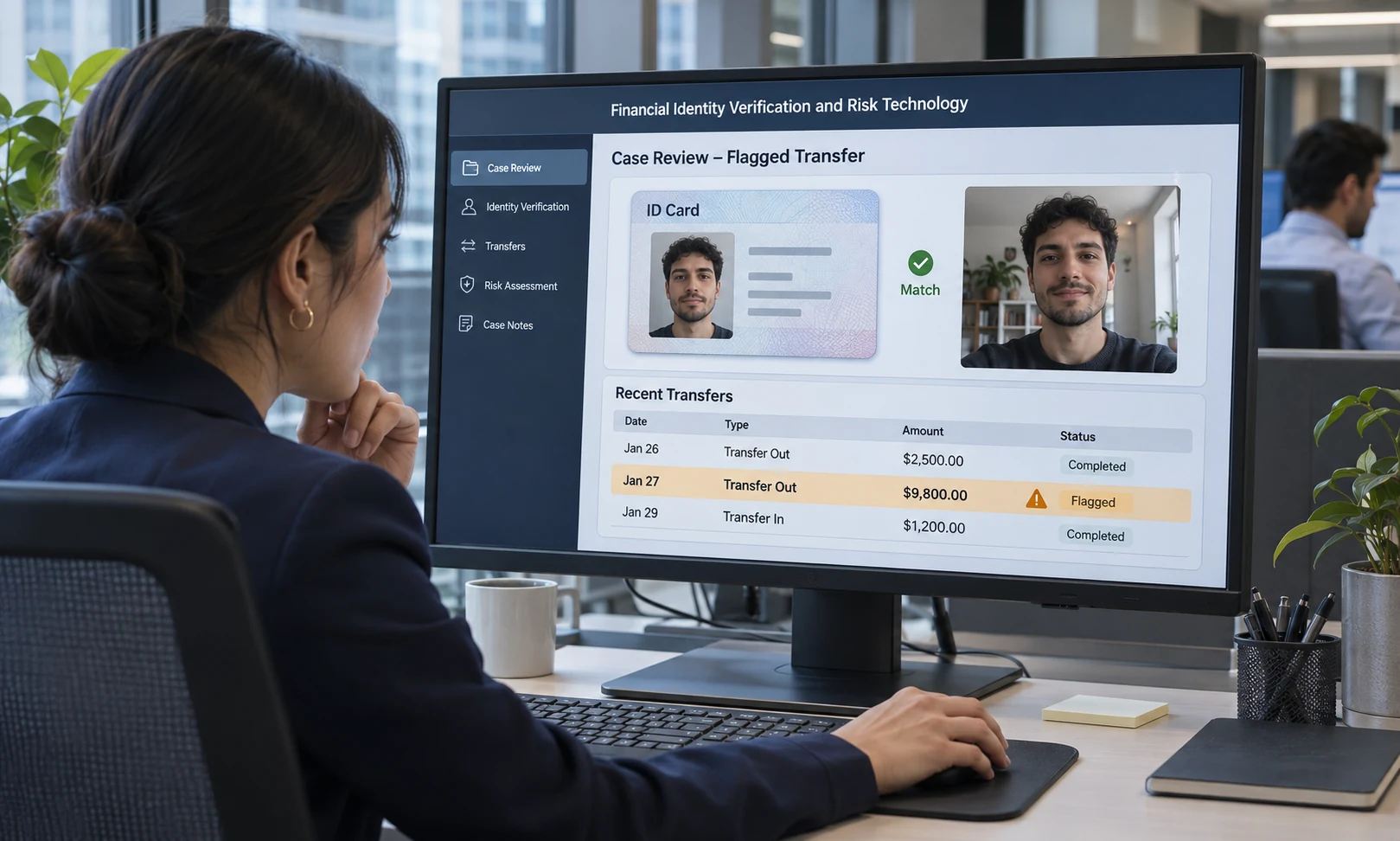
The agreement specifies CITIA’s work on identity verification (KYC), business and beneficial ownership checks (KYB), transaction risk analysis (AML) and supporting model controls.
A case record is designed to show what triggered the flag, such as a mismatch between the name printed on an identity document and the name in its machine-readable zone.
The implementation plan gives authorized reviewers access to the evidence behind each alert and requires human override. Any deployment is subject to applicable regulatory requirements and acceptance testing.

Combine document checks, face comparison and liveness checks where required. Route incomplete or inconsistent evidence to manual review.
Keep the check results, source records and reviewer decision together so another authorized reviewer can retrace the case.
Each function must pass its agreed acceptance tests before it can be used in production.

Use OCR and machine-readable zone (MRZ) checks to extract and compare document data. Biometric comparison and liveness checks can flag cases for manual review, with the evidence and decision recorded in the case history.

Compare entity records with registry information, review beneficial ownership, and route sanctions matches and enhanced due diligence findings into case management.

Monitor transaction patterns, use graph analysis to trace relationships, and prioritize anomalies for analysts to investigate and record their decisions.

Evaluate models against agreed test cases, test for drift, capture reasons for model outputs, and track versions, approvals and overrides in an audit trail.
These controls describe how a separate open finance integration can handle customer permission and data sharing.

With the customer’s permission, an integration can pass the authorized account fields to an application or an analyst for a specified purpose.
Define which checks apply to routine onboarding, missing evidence and higher-risk cases. Add face comparison or manual review where the case calls for it.
Compare submitted information with registry records, trace beneficial owners and send unresolved discrepancies to a reviewer.
Show the reviewer permitted transactions, timestamps and the reason for the alert. Test that a balance-only application cannot retrieve transaction details and that revocation stops further delivery.